Journal / Conservation
ConservationAn Ethical Guide to Photographing Nesting Birds in Florida
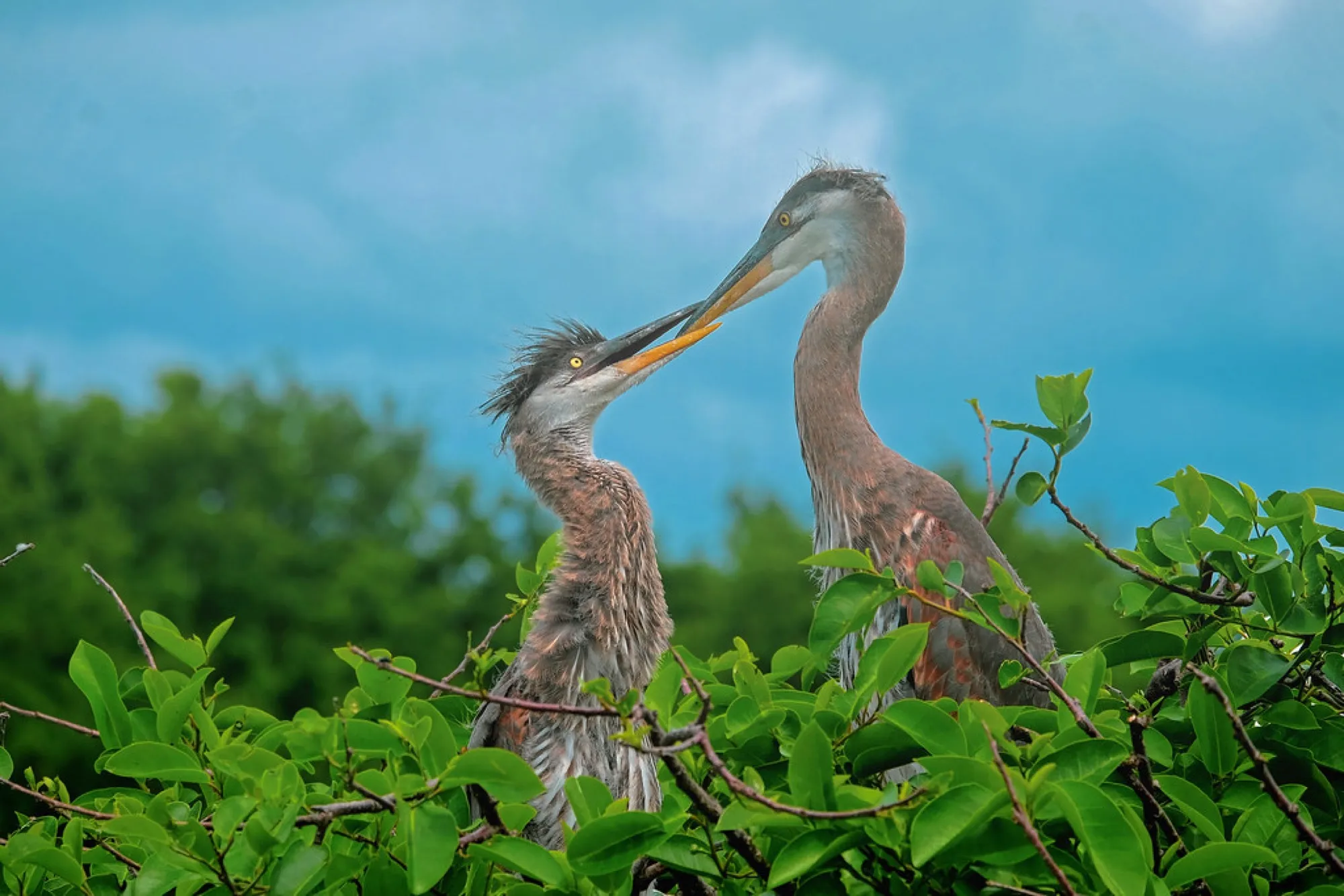
The best wildlife photos come from animals that are relaxed and doing their thing, which is another way of saying the ethics and the good pictures point in the same direction. Nowhere is that more true than around nests. Here's how I try to photograph nesting birds without messing with them.
Let the bird set the distance
The single rule underneath everything: get only as close as the bird allows without changing its behavior. If it stops feeding, freezes, stands up tall and stares, or flies off, you're too close. That reaction is called flushing, and if you caused it, you've already lost the natural moment you came for. Back off and let things settle.
Nesting season needs extra room
From late winter into spring, our local rookeries fill with nests. This is the most sensitive time of the year. A bird that flushes off a nest leaves eggs or chicks exposed to sun and predators, even if only for a minute. So near nests I keep more distance than usual, stay quiet, and keep my time short. A little patience beats a little closer, every time.
Simple habits that help
- Use the boardwalks and paths. Places like Wakodahatchee are built so you can watch nests from a respectful distance. Stay on them.
- Let reach do the work. A longer lens means you can fill the frame without closing the gap.
- Move slowly and quietly. No sudden moves, no calling or noises to make a bird look, no throwing anything to get it to fly.
- Don't touch anything. No trimming branches or leaves for a cleaner shot. The nest's cover is there for a reason.
- Read the crowd. If a group is building around one nest, that's a lot of pressure on that bird. Come back later.
Why it's worth it
Beyond it being the right thing to do, calm birds simply look better. Natural postures, real behavior, easy body language, none of that survives a stressed animal. The photographers whose work I admire all seem to share this, and it lines up with the way Florida's parks and groups like Audubon ask people to behave around wildlife.
The same idea applies with reptiles, by the way. Here's how I handle alligators safely. If you're new to all this, the FAQ covers the basics and the galleries show what patience gets you.